We are not participating.
It’s ‘Fair Trade week’ in Belgium…
To be clear: I have a soft spot for fair trade. In the 1990s I worked in a fair trade shop in Aachen (Weltladen, Jakobstrasse). I loved the idea. Connect consumers here with producers there, pay a fairer price, make trade more human. Pure and simple.
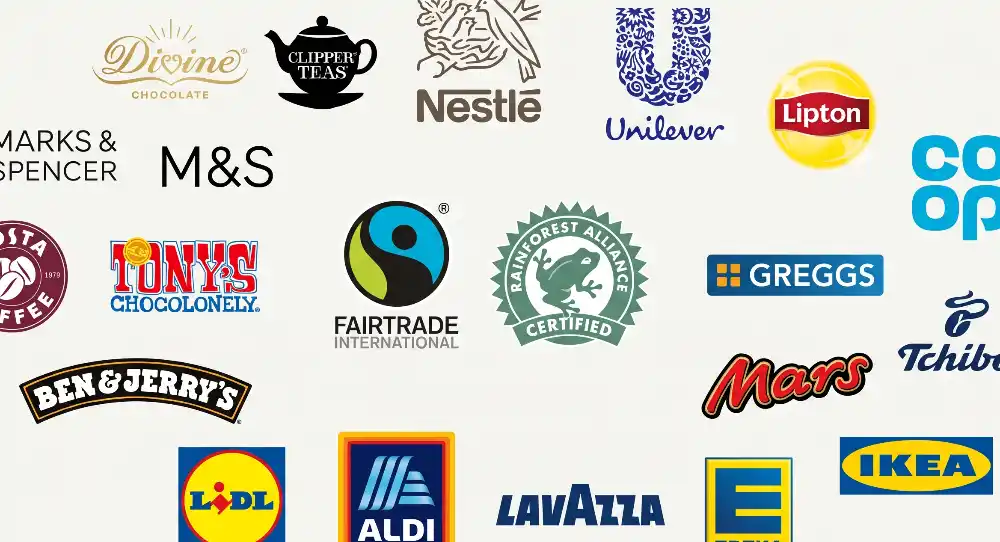
And as communication? It worked brilliantly. After 25+ years, everybody knows Fairtrade. The label is on your chocolate, your coffee, your bananas. And the little frog of the Rainforest Alliance – so cute. A heroic alliance standing between the rainforest and the men with chainsaws. Beautiful story.
That’s exactly the point. It’s a story. Let’s look at what actually happened on the ground, over the past quarter century.
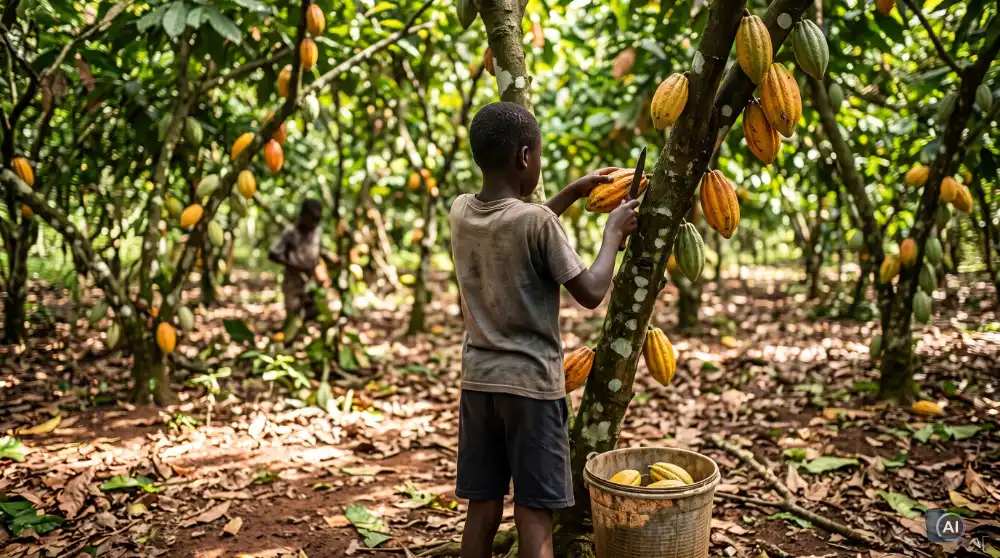
25 years. What changed for the children?
Fairtrade International was founded in 1997. The cocoa industry signed its first commitments on child labour in 2001 (the Harkin-Engel Protocol) promising real reduction “in five years”. Those five years have been renewed ever since.
The most thorough independent study (NORC, for the US Department of Labor) found that in the cocoa-growing areas of Côte d’Ivoire and Ghana, the share of children in cocoa-growing households involved in child labour ROSE from 31% (2008/09) to 45% (2018/19). In absolute numbers: about 1.56 million children in cocoa child labour, 94% of them in hazardous work, which means work with machete or toxic pesticides, while protective gear is often too expensive. The industry’s target of cutting the worst forms by 70% was officially not met. And, tellingly, no newer independent study of that scale has been done since. The best data we have is already six years old.
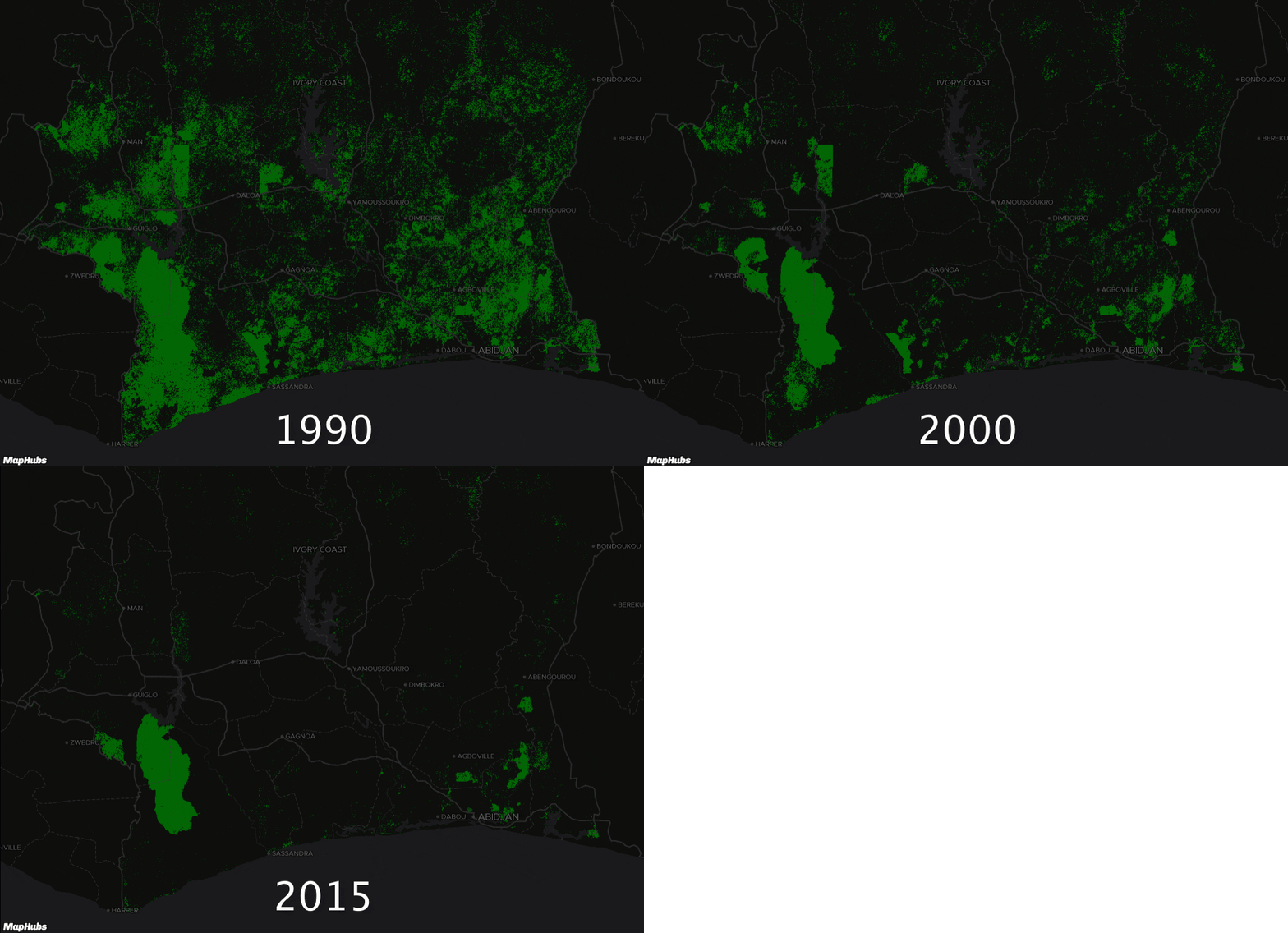
25 years. What changed for the forest?
Côte d’Ivoire, the world’s largest cocoa producer, lost 30% of its forest cover in two decades (2000-2020), and over 63% since 1990. The Ivorian government itself names agricultural expansion, cocoa first among them, as a key driver.
A certification system called the Rainforest Alliance, the cute frog, has been operating there the whole time.
Draw your own conclusion…
The label business is doing fine, though
Here’s the uncomfortable part (What? Even more uncomfortable?!): the labels themselves admit the demand side is shrinking, not growing.
- Fairtrade cocoa sales in 2022 were 233,000 tonnes – only about 5% of global cocoa production – and Fairtrade itself has acknowledged “a very large oversupply of Fairtrade cocoa and a decline in demand“.
- The Rainforest Alliance certified 2,338,000 tonnes of cocoa in 2024, but only 1,400,000 tonnes were actually sold as certified. Roughly a third of the label is produced because someone pays for the certificate, not because anyone demands it.
- When cocoa prices exploded in 2024 (the Cacao Price Crisis where futures peaked above $12,000 per tonne) the Fairtrade Minimum Price was raised to $2,600/t in April 2024. LOL. It became irrelevant overnight. In the one recent moment when cocoa farmers’ income actually jumped, the market did it. The label had nothing to do with it.
- Rainforest Alliance earns around 60% of its revenue from certification royalties paid by the companies using the logo. That’s not a scandal. It’s just a fact you should know: certification is an industry, and industries sell what their customers want to buy. What the big buyers want to buy is the communication, not necessarily the change.
What we do instead
From day one, MIKE&BECKY chose a different path: transparency over labels.
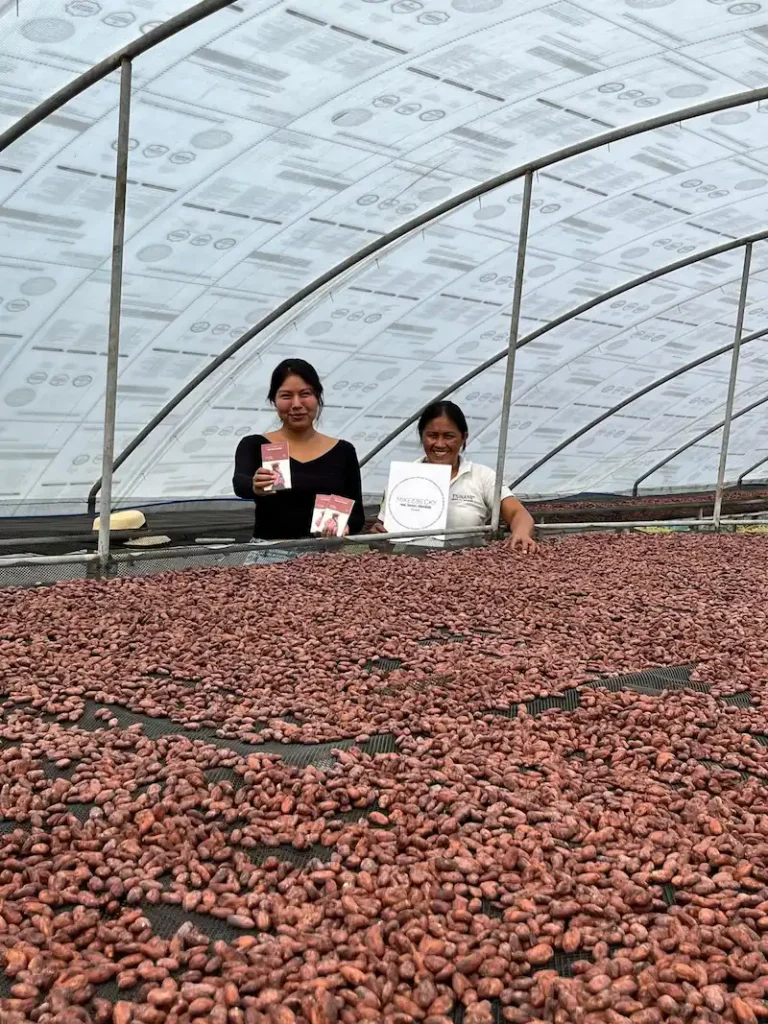
Our cacao isn’t “certified”. It has a name and address. Three examples:
- Qori Warmi, Ayacucho 131, Barrio Valle Dorado, Pichari, Peru
- Esco Kivu, 56 Boulevard Nyamwisi, Beni, North Kivu, Democratic Republic of the Congo
- Maya Mountain, 13.5 Miles San Antonio Road, Toledo Dsitrict, Punta Gorda, Belize
You can ask us where the beans come from, who grew them, who we paid, and how much. You can ask what we don’t know yet, too.
That’s less comfortable than a frog on a wrapper. Transparency means you can check us any time.
A label means you trust a paid-for logo.
The first is accountability.
The second is marketing.
We think 25 years of rising child labour and shrinking forests while the labels grew bigger is enough evidence that the logo isn’t the solution. The solution is dragging farmers, cooperatives and buyers out of the shadows, joining the brands in the spotlight: names, addresses, practices. Nothing to hide.
So: enjoy the Fair Trade Week. We won’t be taking part.
We’ll be working. As usual. In our transparent workshop in Anderlecht.
Come visit and ask us anything.
Yours chocolatey,
Björn